loading
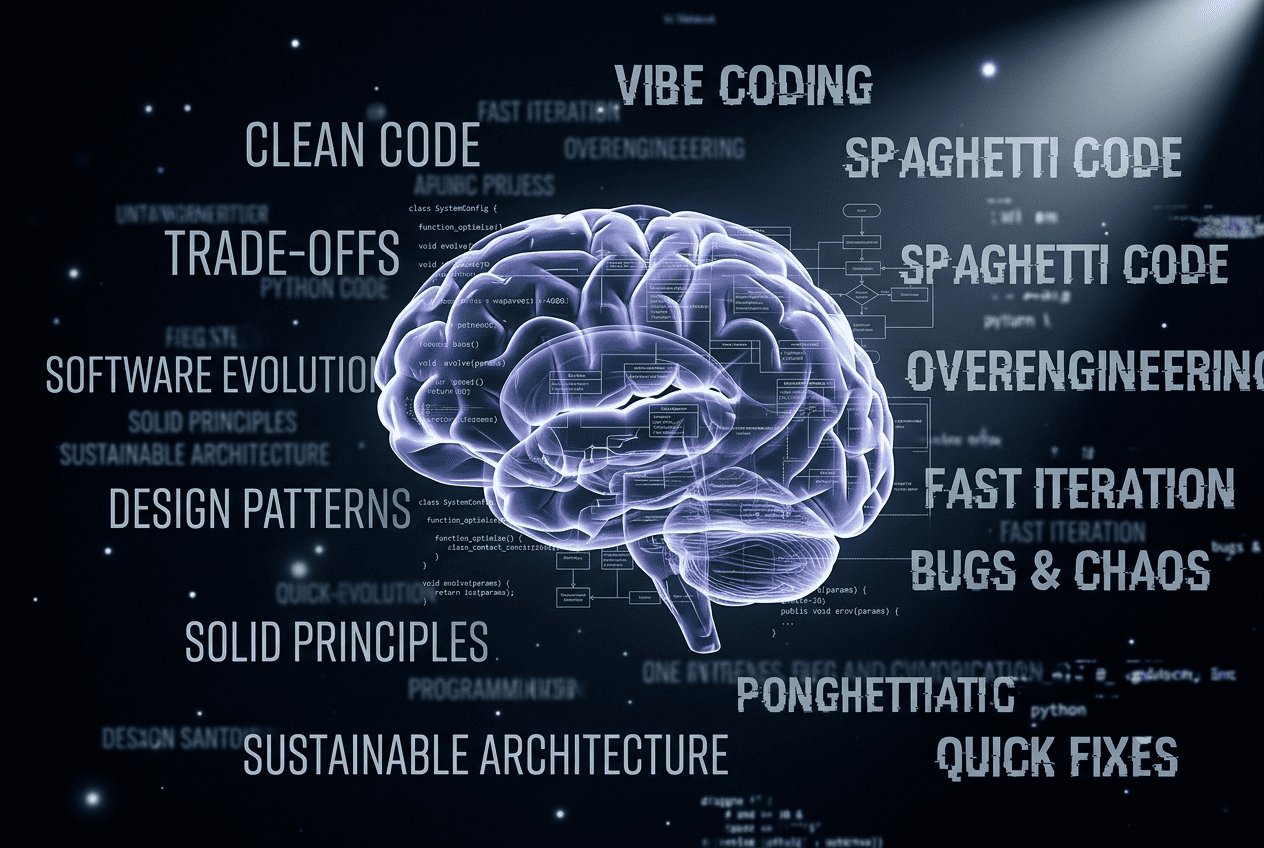
How Does a Professional Programmer Think? Decisions Before Code
At the beginning of learning programming, many think that professionalism means knowing more languages or more tools.
But with time the truth emerges: the real difference between programmers isn't in the code they write, but in the decisions they make before writing any code.
Think Twice, Code Once
There's a well-known rule among engineers: think twice, code once.
This rule matters especially during the foundation phase. When building a new project, early decisions define its shape for years. Early architectural mistakes become very costly to fix later.
So the professional deliberately slows down at the start. They draw. They analyze. They break the system down. They understand relationships. Then they start writing. The goal isn't slowness — it's reducing future chaos.
Think While You Try
But the same rule doesn't always apply.
When a website or application is already running and a production problem appears, the mindset changes. In live systems you can't stop the world for perfect design. Sometimes the best analysis is the experiment itself.
A professional knows when to think long and when to move fast.
Make It Work, Then Make It Better, Then Make It Faster
One of the most important rules in software development: make it work first, then improve the design and organization, then improve performance only when needed.
Beginners usually do the opposite — they try to optimize performance before there's a real problem. But most performance issues don't appear until after real usage.
A program that doesn't work doesn't need high performance.
Leave the Code Better Than You Found It
There's a well-known principle: leave the code better than you found it.
When you don't have time to rebuild the entire system: improve names during modification. Clean up small functions. Remove obvious repetition.
Small scattered improvements over time add up to a massive difference. Large projects don't improve in one leap — they improve through thousands of small improvements.
Vibe Coding: When Code Works Without Understanding
With the spread of AI tools, something called Vibe Coding emerged: fast experimentation, copy and modify, make the code work by any means.
This approach is useful for exploration, prototyping, and fast learning. But the danger starts when this becomes the primary way of building. The code works — but no one knows why.
A professional uses Vibe Coding as a starting point, then converts it into understandable, organized code.
Spaghetti Code: The Result of Deferred Decisions
When design is consistently ignored, Spaghetti Code emerges: random coupling, small modifications that break the system, constant fear of change.
This doesn't happen because the programmer is weak. It happens when the only goal is making every feature work immediately without gradual organization.
Clean Code: Code That Reads Easily
Clean Code isn't aesthetic luxury. It's code that reads clearly, has defined responsibilities, and is easy to modify.
Code is read far more than it's written. And most development time is spent understanding code that already exists.
Beware of Overengineering
One of the most dangerous mistakes programmers make is trying to build a system that will last a hundred years.
You don't know how technologies will change, how the product will grow, or what users will need in the future. Building early complexity to solve problems that haven't happened yet is called Overengineering.
A professional builds for what's needed today while leaving room for evolution later.
Software Always Evolves
The early versions of Facebook, YouTube, and Google were very simple compared to what they are now. These systems didn't start with a massive perfect design. They started with working solutions and evolved gradually.
In programming: evolution is the rule, not the exception. Rebuilding and continuous improvement are natural parts of any project's life.
Thinking in Trade-offs
There are no free decisions in programming. Every choice is a balance between speed, simplicity, performance, and maintainability.
A beginner looks for the best solution. A professional looks for the most appropriate solution for the current context.
A professional programmer doesn't stand out because of writing speed. They stand out by knowing when to think long, when to move fast, when to simplify, and when to stop adding complexity.
Your comment matters
Share with me your feedback or any note you’d like to add

How to Grow in Your Programming Career? The Difference Between Junior, Mid, and Senior
- mohammed albadry 000
- 1
Why Do Most Programmers Stop Growing After the First Year?
- mohammed albadry 000
- 0
Your Technical Quality Might Be the Reason You Fail
- mohammed albadry 000
- 0
How to Start Learning Programming? The Foundation That Builds Everything
- mohammed albadry 000
- 0
How to Learn Programming the Right Way? A Methodology That Actually Moves You Forward
- mohammed albadry 000
- 0